



![JV boys soccer goalie sophomore Bear Brummett does a goal kick. Normally, Brummett plays defense, but when starting goalie sophomore Kurt Schratweiser missed a match due to illness, Brummett was thrust into the role. “[Brummett] did a great job, especially considering he hadn’t played the position in so long,” Head Coach Casey McDonough said.](https://spschronicle.org/wp-content/uploads/2026/01/image2-1200x800.jpg)




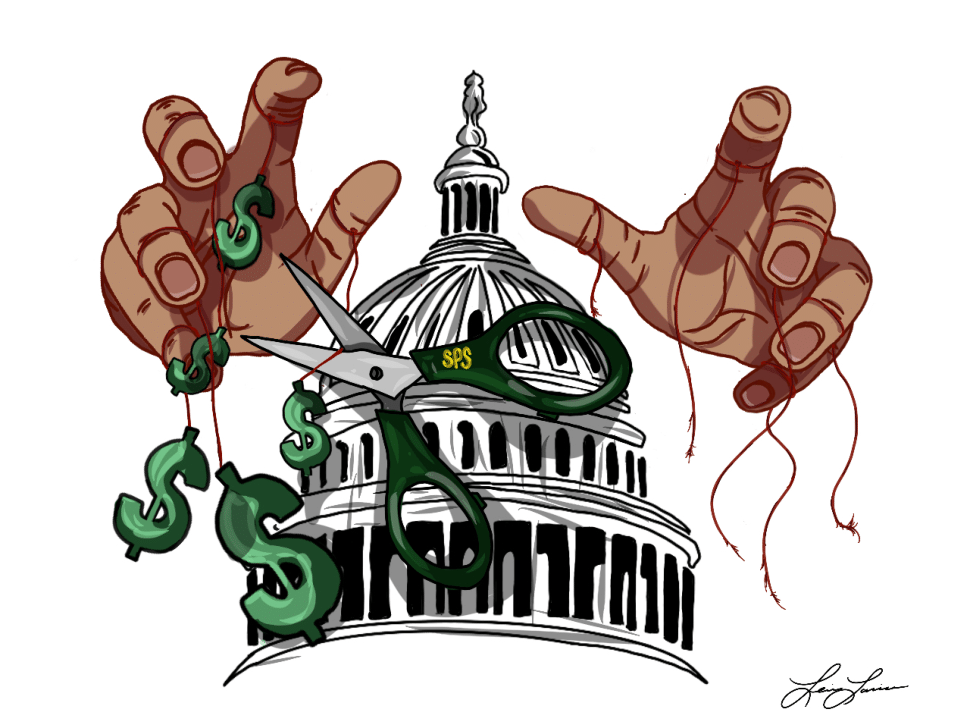


In January 2026, Head of School Nancy Spencer published a letter outlining what the responsible and appropriate use of Artificial Intelligence (AI) looks like at Shorecrest. In this letter, she invited readers to view the schoolwide policies for both faculty and students, dated to October 2025.
Spencer also stressed the importance of keeping up with the changing world and exploring the most effective ways to learn alongside AI. “We must … utilize AI to cultivate in the next generation the very human-centric skills that AI cannot replicate,” she wrote.
The permitted use of AI for Shorecrest students varies greatly, case by case. Generative tools can only be used at the specific discretion of a given teacher or their department. Teachers thoroughly promote and discuss the guidelines alongside their class syllabus at the beginning of the academic year.
Lesser-known to the student body is how the policy applies to faculty. In short, teachers are expected to use an estimated 80% of their own material, with a maximum of 20% created with AI assistance.
According to the Faculty Policy and Guidelines for the Use of Artificial Intelligence Tools, AI may only be used as a tool to enhance pre-existing lessons and improve a classroom environment that has already been fostered by the teacher themself. Of course, they’re also responsible for all content AI creates in their name and must disclose its use to students and parents alike.
“We have parents who think we should be doing a lot more with AI. We have parents who think we shouldn’t be using any. So, I think we’re always trying to look at what our community wants, but also what’s best for kids and what’s best for adults,” Assistant Head of Upper School and US Academic Dean Anne Michelle Frey said.
The faculty guidelines also include a bulleted list of 22 specific approved uses of AI. Many mirror those within the bounds of the student policy, like generating additional practice problems, reformatting content, translation tools for non-English speakers and personalizing material to a student and automated grading systems.
Other permitted applications include the creation of worksheets, quizzes and lesson plans. Using AI, teachers may receive help creating their assessments, summarizing long readings and generating feedback on written assignments, given it undergoes significant review. Outward communication like emails, academic memos and newsletters follow the same rule.
While few are aware of the specifics of the policy itself, students have become increasingly aware of the use of AI by their teachers. Opinions on the matter vary greatly, and some students have become frustrated.
“I do believe AI is a helpful tool that can assist teachers, but there’s a certain extent to which it should be used … Families [at Shorecrest] pay for the knowledge taught to children by teachers, not for the knowledge from an AI bot that kids can access on their own,” junior Carter McCleish said.
For some, it’s alarming to see ChatGPT’s signature format on test day. Regardless, the policy stands.
To others, AI assists individualized learning and promotes faster feedback.
“As a math teacher, there might be parts of a test where I don’t let kids use a calculator because I want to see how they can graph without a calculator. But, if I use the calculator to grade quickly, that’s okay. I’ve already learned that material. There are going to be times where faculty can do things that we don’t let our students do because the purpose and intent of what’s being done is different,” Frey said.