



![JV boys soccer goalie sophomore Bear Brummett does a goal kick. Normally, Brummett plays defense, but when starting goalie sophomore Kurt Schratweiser missed a match due to illness, Brummett was thrust into the role. “[Brummett] did a great job, especially considering he hadn’t played the position in so long,” Head Coach Casey McDonough said.](https://spschronicle.org/wp-content/uploads/2026/01/image2-1200x800.jpg)






Dear Readers,
The average student has heard plenty about AI by now. The issue follows us everywhere, from the AI policies at the top of every Schoology page to the thorough checks applied to every assignment. It’s the reason LEQs are being handwritten and the mastermind behind TikTok’s viral AI fruit dramas — a play on the reality show “Love Island” –- that received a feature in The New York Times.
The Chronicle has contributed plenty, publishing five stories on the various impacts of generative platforms since last November. Every scrutinized submission serves as a reminder of strict, but reasonable, student guidelines.
When an essay can be formulated by just entering a prompt, it’s hard to guarantee future generations will learn to write at all without strictly enforced limitations. That’s why The Chronicle doesn’t oppose restrictions on AI in educational environments. In fact, we wish they were even harsher — just not for students.
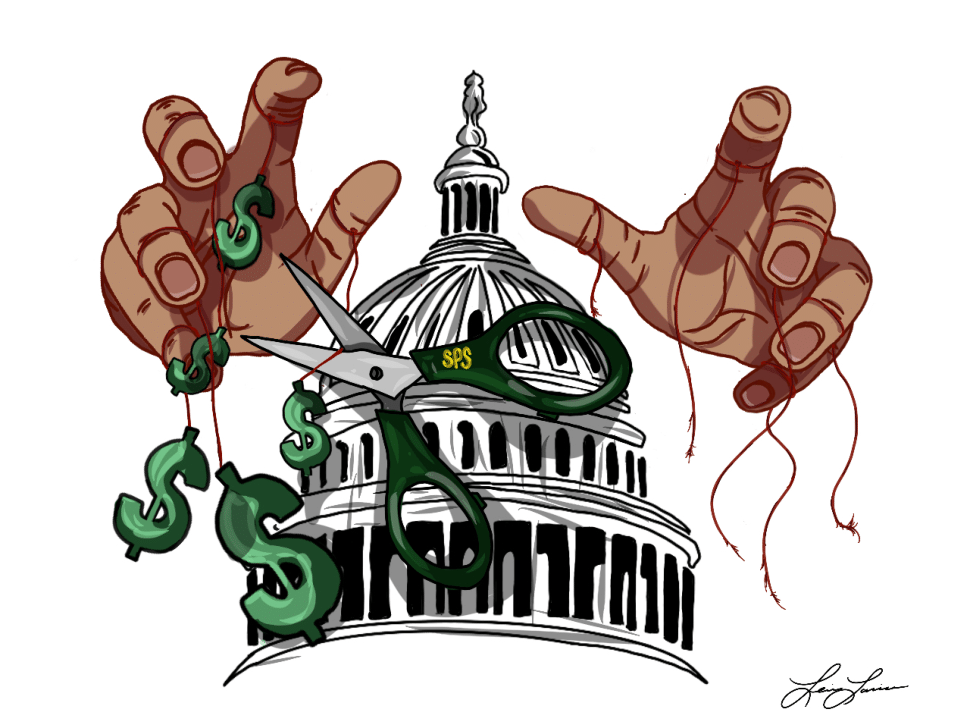
Our concerns lie with the policy applied to faculty. Unlike the general student guidelines, which include 22 bullets on the rules, responsibilities and risks of AI use, the corresponding faculty document features only 13 restrictions, but 22 bullets outlining the various acceptable uses. While some resemble those in the student document, others far exceed our limits.
Most importantly, it’s written that anything produced by faculty members is their responsibility entirely, for better or for worse.
AI-generated material can only make up 20% of classroom content and must be thoroughly reviewed. Regardless, it’s still well within a teacher’s bounds to receive assistance creating assessments, presentations, rubrics and lesson plans. They can even summarize textbook readings or generate feedback on students’ written assignments, provided it undergoes significant review.
From the perspective of students, it just doesn’t feel fair. The most common sentiment seems to be, “If they can use it, why can’t I?” In some ways, this question is understandable. But, as administration argues, our teachers aren’t here to learn new material — they’re here to teach it in the most efficient and effective way possible, which AI has the potential to assist in.
That said, there’s a fine line between helpful and harmful quantities of such tools, and crossing it could lead to severe consequences.
In an environment as young and impressionable as a school, the noticeable use of AI by teachers sets a bad example. Teachers are more than just spouts of information; they’re resources and role models that play a critical role in shaping their students’ foreseeable futures. When students see these role models taking the “easy way out,” it can discourage them from challenging their own minds to work creatively and independently.
Plus, it’s important to understand that the wrongful use of AI by students is almost impossible to avoid, despite strict guidelines and tools like AI checkers.
That’s why it’s crucial for educators to foster an environment of mutual respect. When students are confident their teachers put immense amounts of work into their classroom environment, they’re more likely to respond with that same energy. Having appreciation for educators and knowing they’re trying just as hard fosters trust and connection, as well as a willingness to uphold the teachers standards.
This isn’t to say that AI use among faculty should be prohibited entirely. In many ways, it’s a very useful tool. For organization, brainstorming and other processes that take place in the background, it can make tedious tasks easier without lasting impacts.
The issue arises once students begin to notice their teachers doing the very thing they’ve been warned against time and time again. It’s when their test has ChatGPT’s signature horizontal page-breaks and every question features an em dash. When the use of AI is visible, students begin to feel like their educators are going along with the rapid, confusing and often frightening global advancements while they’re left in the past, writing essays by hand.
Put simply, it should be the responsibility of our faculty to model the behavior they expect to see from their students. In a classroom setting that openly embraces the use of artificial intelligence, it’s reasonable to see aspects in both teacher and student work. But when student essays undergo multiple rounds of AI-checking from different websites, it shouldn’t be acceptable for their prompts or feedback to be AI-generated.
The spread and use of AI around the world is unavoidable. Here, though, within our small community, it can be controlled. All we ask is that if these restrictions are so harsh on students, it is only fair that the same is expected of our teachers.