




![JV boys soccer goalie sophomore Bear Brummett does a goal kick. Normally, Brummett plays defense, but when starting goalie sophomore Kurt Schratweiser missed a match due to illness, Brummett was thrust into the role. “[Brummett] did a great job, especially considering he hadn’t played the position in so long,” Head Coach Casey McDonough said.](https://spschronicle.org/wp-content/uploads/2026/01/image2-1200x800.jpg)




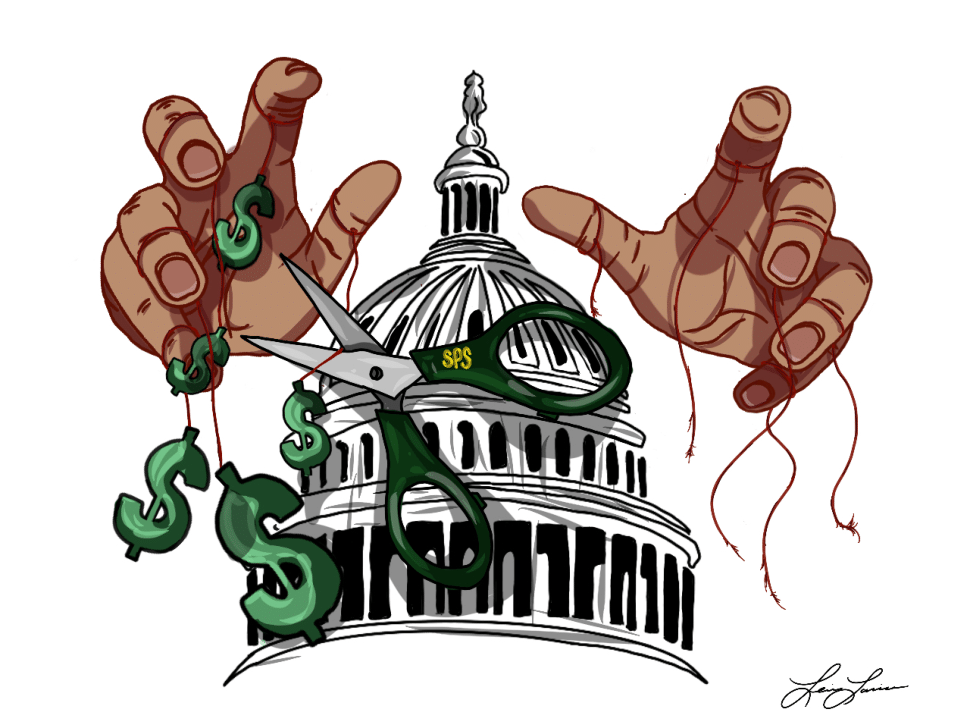



The Jeffrey Epstein files were supposed to answer questions. But the first thing any investigators will see is thousands of pages and emails covered in thick black bars or white-out, obscuring much of the text.
For students attempting to educate themselves and read the documents online, the release brought confusion. Instead of being able to consume media from the source, many rely on social media jokes and memes for information.
According to a survey of 52 Shorecrest students, 84.6% said they see jokes regarding the Epstein case on their social media, anywhere from once a week to every day.
“Every human deserves to be treated with dignity, and yet we forget so often that everyone’s dignity is important and that we should all figure out how a person wants to be treated,” Asad said.
Students interact with current events often through humor. Platforms like TikTok and Instagram turn long and complex news stories into digestible short-form content and jokes, appealing to teens.
“Their [teens’] first reaction when they hear ‘Epstein’ is to laugh just because of the huge amounts of exposure to the jokes and the memes about it. I think it takes away the accountability from Epstein,” junior Leonardo Fernandez-Pallante said.
According to the National Library of Medicine, COVID-19 significantly increased social isolation in teens, leading to stunted conversational and interpersonal skills. This caused many of them to take refuge online.
“I think it’s desensitization to these tragedies that is causing them to diffuse that potential psychological situation for themselves and for others by perhaps using humor,” Upper School History Teacher Daniel Asad said.
Humor seems to be the easiest coping mechanism for the “chronically online” Gen Z. However, there’s a reason so many people make light of serious situations.
“It’s about making fun of these bad people to bring them down. If you fear them and fear what happened, you kind of give them power. I think making a joke out of it is a way for people to cope,” junior Yousef Mansour-Barillas said.
However, making jokes can skew the situation. In fact, 36.1% of students said humor makes the situation feel “less real” to them, and 28.8% said it makes it difficult to distinguish between rumors and facts. It can also downplay the seriousness of the release and make it difficult to conceptualize.
“There are so many of our government officials [in the files], and people are just completely ignoring that. Do you not realize how big of a deal this is? There are so many well-known people that we rely on [in the files],” sophomore Sara Ferris said.
In the spectacle, the real complexity and tragedy of the situation can be lost, as well as the true victims of such a serious crime. There’s a thin line between a joke and a harmful comment — a line society still seems to be navigating.
“I think [jokes] are harmful to people who are affected by [Epstein’s] actions. I don’t see the victims finding the situation funny if they were looking on TikTok and saw people laughing at him and making him seem like the main character,” Fernandez-Pallante said.
But sometimes, it’s hard to get a full understanding. Memes spread information and sometimes awareness quickly, but they don’t always include the correct context. Students agree that jokes often circulate further than any concrete facts behind them.
“I think they’re just participating in a trend. I think more than half the people [spreading information] don’t actually know much about Epstein,” Fernandez-Pallante said.
While humor can be a good way to diffuse and address serious topics, people often wonder where to draw the line. 50% of students think the line is crossed when it targets victims of the crime.
“It’s just discrediting whatever they went through,” sophomore Bianca Felipe said. “I think a lot of sympathy and empathy is lost when [serious topics] become jokes.”
While humor can be a coping mechanism for some people, not everyone sees it that way. 38.5% of students said that when they hear an insensitive joke, they usually laugh or join in. Another 42.3% said they would ignore the situation entirely.