



![JV boys soccer goalie sophomore Bear Brummett does a goal kick. Normally, Brummett plays defense, but when starting goalie sophomore Kurt Schratweiser missed a match due to illness, Brummett was thrust into the role. “[Brummett] did a great job, especially considering he hadn’t played the position in so long,” Head Coach Casey McDonough said.](https://spschronicle.org/wp-content/uploads/2026/01/image2-1200x800.jpg)






It’s the year 2000, and computers are no longer just for math nerds and SimCity enthusiasts. The World Wide Web has taken hold of both middle-class America and the stock market, and anyone with a bank account is investing in an online service while GDP is higher than it’s ever been before. What could go wrong? 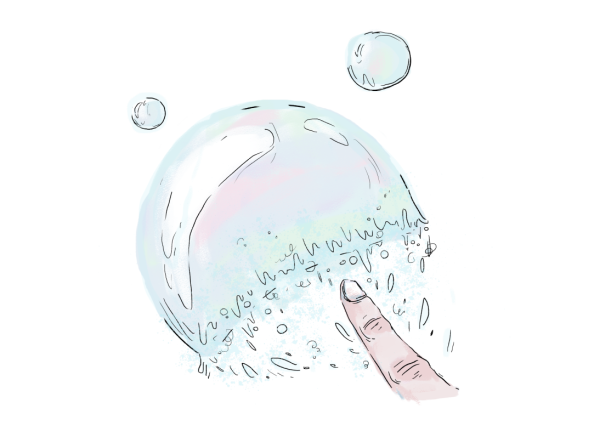
As it turns out, a lot. Five trillion dollars worth of market cap went down the drain from 2000 to 2002. The stock market crashed, millions of jobs were lost and a months-long recession occurred. This, my friends, is what happens when a stock market bubble bursts.
Bubbles occur any time a product, service or technology is dramatically overvalued by investors. As a potent combination of capital and unfounded faith is thrown towards the newest promise of revolutionary change, a huge portion of the economy finds itself in the sweaty hands of hastily-created startups, money-hungry grifters and drooling Wall Street stockbrokers.
Sound familiar?
It should. The entire economy seems to be in shambles at the moment: federal minimum wage is seven dollars an hour while the average home costs over $400,000. Inflation is up, jobs are scarce, but one issue has stolen the attention of the masses like nothing else: the economic implications of generative AI.
All over social media today, economists and influencers alike are happily announcing the existence of a soon-to-pop stock market bubble — usually one that takes its toll on ChatGPT’s hopes, dreams and investors. While some may find this to be a source of anxiety, anyone who isn’t a fan of stolen art, deepfakes of dead people and videos of Donald Trump dumping feces on protestors would likely celebrate the collapse of these billion-dollar slop factories. I, like many others wishing for a sliver of normalcy in their lives, found myself enamored with the idea.
While I would love nothing more than to witness the fall of Sam Altman’s empire, the bitter truth is that no economic crash can spell its doom, whether there’s a bubble or not.
“Those that survived the ‘dot com’ bubble — Amazon, Google — [they are the] most massive, influential companies in the world right now,” Director of the Ross Roeder Institute Earl Walton said. “If there is a bubble [now], and it pops, there will be winners…four or five superstar companies that have a lot of money and a lot of power. They’re already backed by Google and Meta and all these others, so those folks are definitely going to survive.”
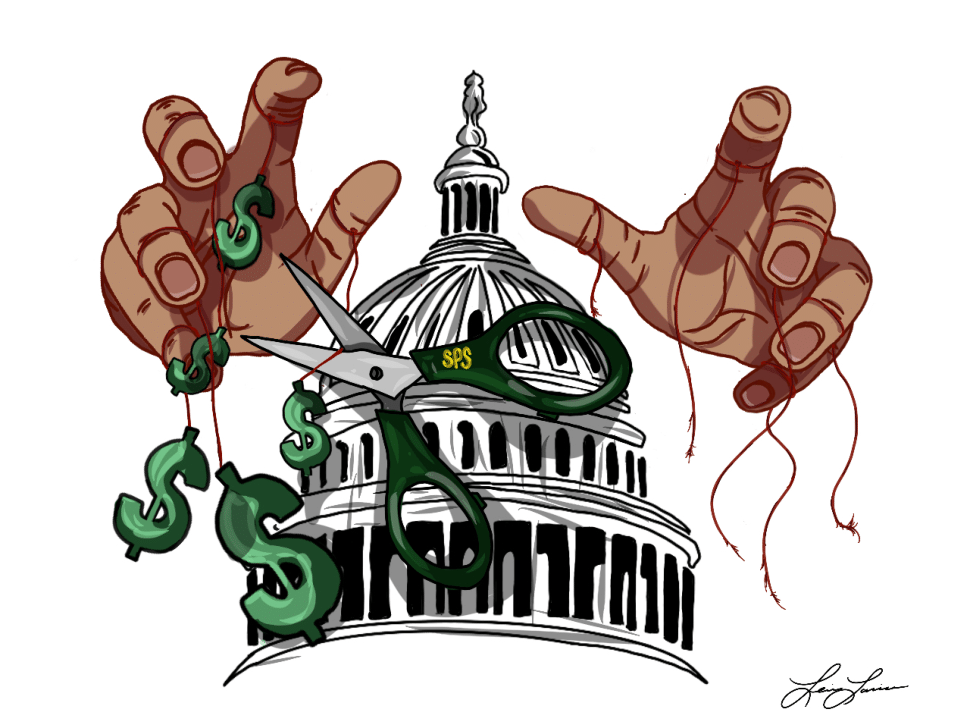
If you’ve been keeping up with economics, this sentiment might sound surprising. OpenAI, the owner of popular AI chatbot ChatGPT, is currently losing twice as much as it’s making and isn’t on track to be profitable until 2029. Other comparable companies aren’t doing any better. Sora 2 was clearly shipped to us from Hell, so why can’t the free market send it back?
“They will ultimately grow into that bigger space,” Walton said.
Sure, an economic crash might take out thousands of smaller techy startups, but corporate America’s biggest players can run to the open arms of Zuckerberg and co. as soon as things get dicey. Not to mention, most of the country is worrying about paying rent; normal people don’t have much at stake when it comes to this side of the stock market.
“When we had the ‘dot com’ bubble and real estate bubble, [those things] were more accessible to everybody,” MS/US Media & Instructional Technology Specialist Casey Giroud said. “Your average person is not investing in AI right now.”
If the bubble doesn’t burst, AI giants will simply buy out and usurp their tinier competitors until nothing is left. If the bubble does burst, companies like Open AI, Claude and Anthropic will become one with their forefathers. So, what do we do?
Nothing. Whatever happens, life goes on for the everyman, the only difference being that Google has another way to collect and sell our most personal data.