



![JV boys soccer goalie sophomore Bear Brummett does a goal kick. Normally, Brummett plays defense, but when starting goalie sophomore Kurt Schratweiser missed a match due to illness, Brummett was thrust into the role. “[Brummett] did a great job, especially considering he hadn’t played the position in so long,” Head Coach Casey McDonough said.](https://spschronicle.org/wp-content/uploads/2026/01/image2-1200x800.jpg)







Typically, we think of protests as hostile uprisings; however, junior Harper Nelson-Wooley, who attended a No Kings Day protest in Gulfport, described it much differently.
The sidewalks were brimming with various inflatable costumes, multicolored confetti, children of all ages and ethnicities, vibrant colors and life. Rather than the proclaimed toxic environment, the protest felt like a party.
“It felt like a celebration and that was really powerful, because we don’t have a lot to celebrate right now,” Nelson-Wooley said. “An act of protest means looking to see horrible things happening and then saying I’m going to keep living anyway.
Movements like No Kings Day reflect an effort to promote the ideals that many feel robbed of with our current administration: that the government should always be in favor of the people. Nelson-Wooley found their experience comforting in a time of high uncertainty.
“I’m not sure if any actual change is being made by standing on a street corner with funny signs and cheering,” they said. “No matter what happens in the future, at least I’m not alone in feeling angry, upset and betrayed [by the government].”
Beyond protests, social media has developed into one of the most powerful networks of news and information for young people. Political figures now have a more direct point of access to the next wave of voters, typically addressing complex issues in short-form content.
The last presidential election saw an immense increase in the use of platforms like TikTok for their campaigns, and the recent election for New York’s new mayor, Zohran Mamdani, saw much of the same. While increased usage can allow misinformation to be easily shared, more people are getting involved in politics and the country’s future.
“I think that it’s really hard for young people to keep up with news and even harder to make sure that they’re getting that news from anywhere reliable,” Nelson-Wooley said.
Even with the positives, the constant exposure and reminders of the complex things happening in the world can be overwhelming, especially for younger generations just starting to use social media.
“Most people my age don’t really talk about politics that much. I think a lot of us just don’t know enough about it yet,” freshman Mika Mizrahi said.
After conservative political activist and influencer Charlie Kirk was killed earlier this year, many began to understand the consequences of these divides. His messages promoted his strong right-wing ideals, and his death shocked the country. Even through the countless cases of unnecessary gun violence in the country, his death was what it took for many to realize that political polarization is approaching the point of no return, and there are tangible consequences to it.
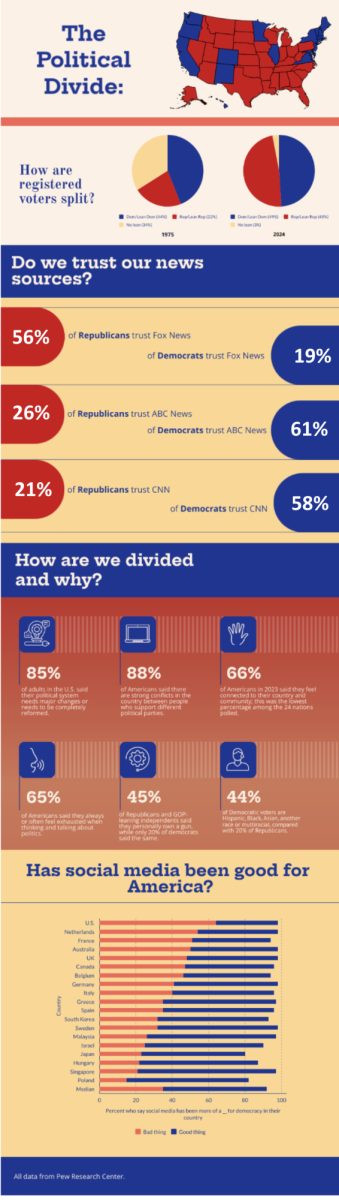
According to a study by the Pew Research Center, the partisan gap on issues such as immigration, climate change, gun control and abortions has reached a historic high. Not only do many Americans disagree with the other side, but they also believe the opposing views are direct threats to them and their country’s well-being. The wave of division is amplified by these effects of social media, technology and this sense that political identity is a critical part of personal identity.
“I think the word ‘division’ has limits,” Nelson-Wooley said. “I think that the current political situation goes beyond those limits.”
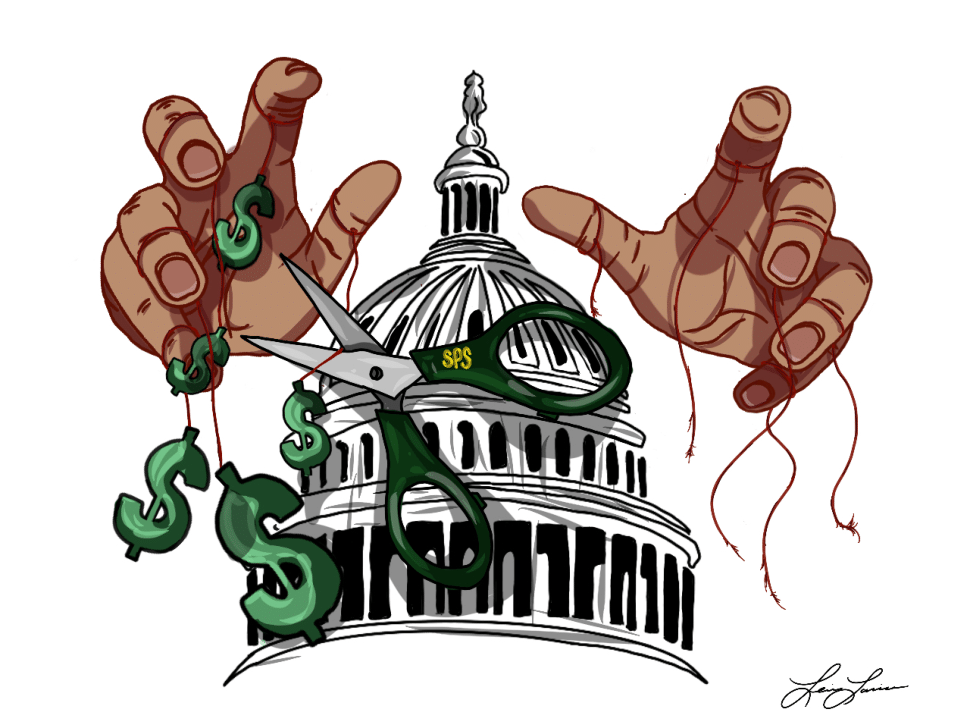
This disconnect is visible in our government. The government recently wrapped up the longest shutdown in history, which led to the temporary suspension of “non-essential” government operations as well as their employees’ salaries.
Even though “essential” operations remained in service, the workers in these services also had their paychecks withheld for the remainder of the shutdown. In total, close to 1.4 million federal workers, including some Shorecrest families, had to go over a month with no income coming in.
The federal fiscal year ends on Sept. 30, and before this date, Congress and the President must pass bills to approve the funding for the next fiscal year. This year, it failed to happen for a few reasons.
Even though Republicans currently control both the Senate and the House of Representatives, they still needed 60 votes to pass the federal spending bill, which gave the Democrats some power to negotiate the terms.
Democrats wanted the bill to include the reversal of Trump’s cuts to Medicaid and cheaper health insurance for a large number of American citizens. They also weren’t keen on including the proposed budget cuts to other federal healthcare programs. Then, as a last attempt to prevent a shutdown, the House passed a stopgap bill, which ultimately did not pass through the Senate, plunging the government into shutdown.
“The fact that people aren’t willing to negotiate in the Senate over a budget bill and are going to let that happen is kind of ridiculous and borderline childish, and that makes me very nervous about the people that are running our country,” junior Andrei Imensek said.

On Nov. 12, the shutdown officially ended, funding the government until Jan. 30. While the shutdown is over, this funding measure is temporary, leaving the threat of another shutdown looming.
However, outside of the Capitol, frustration and tension among Americans continues to rise because of these divisions.
“A government should provide for the people, [and] that means safety, justice and basic human dignity,” Nelson-Wooley said. “It’s not providing those things for its people right now.”
Extreme political polarization is a national challenge, twisting our democracy in ways that affect everyday life. For students growing up to be the next generation of voters, many younger people seem to think we should approach disagreements with compassion and understanding, and that disagreement does not have to mean disconnection.
“People just need to actually listen to each other instead of trying to win an argument. If we learned more about why someone believes what they do, it might be easier to see their side,” Mizrahi said.