


![JV boys soccer goalie sophomore Bear Brummett does a goal kick. Normally, Brummett plays defense, but when starting goalie sophomore Kurt Schratweiser missed a match due to illness, Brummett was thrust into the role. “[Brummett] did a great job, especially considering he hadn’t played the position in so long,” Head Coach Casey McDonough said.](https://spschronicle.org/wp-content/uploads/2026/01/image2-1200x800.jpg)




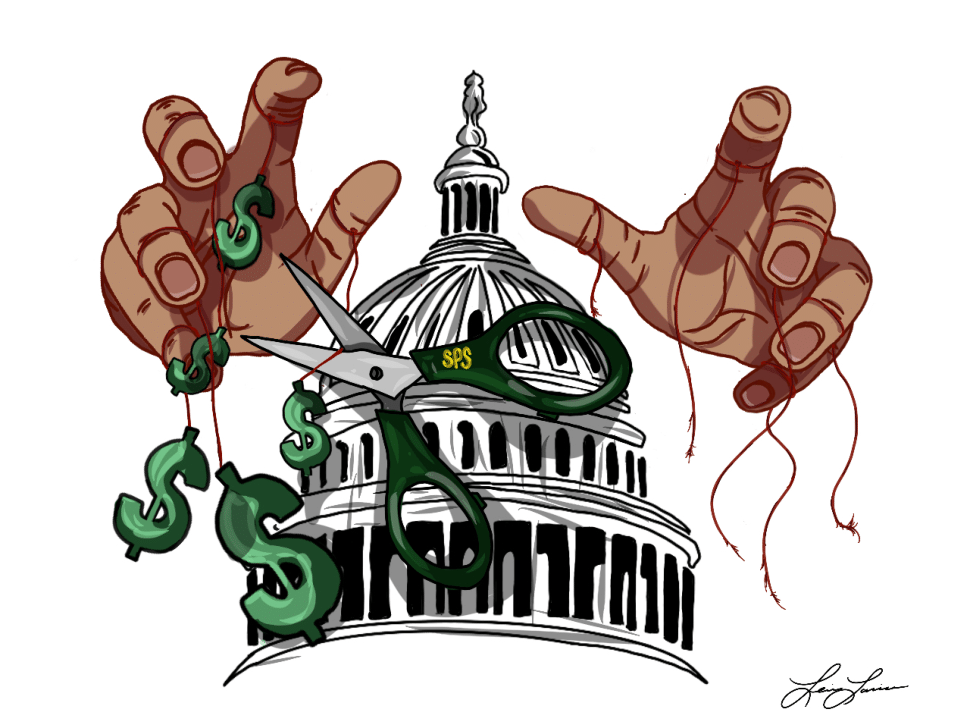


Over the past few months, an unpopular rumor has echoed through the Landy hallways: The ultimate consequence of AI misuse may be the return of handwritten essays.
For a decade, computers have been the backbone of the classroom, the bridge between students and their learning. However, the rapid ascent of Generative AI has threatened to turn that bridge into more of a shortcut.
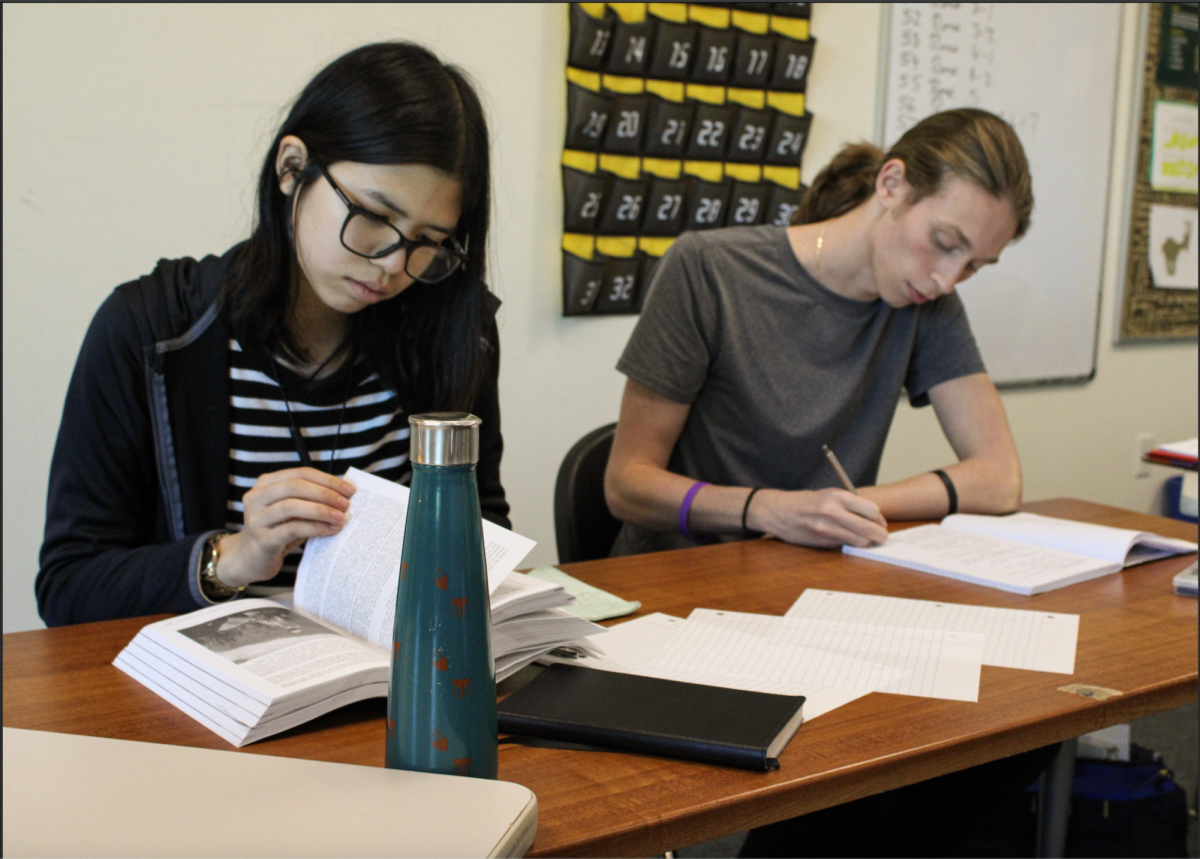
Student uses for AI range from relatively innocent requests, like help on homework, to full on plagiarism. Teachers have begun using countermeasures like AI checkers, but these methods remain imperfect, and cannot completely stop the use of AI. That’s why, to combat academic dishonesty, some teachers have begun considering a switch back to handwritten essays.
For US Social Studies Department Chair and GSI Director Kayla Brazee, the threat of handwritten essays became a reality last year after several instances of AI-assisted writing. She switched assignments back to paper — a decision she admitted had consequences for both students and herself.
“It worries me that we’re not going to have time to do the fun, interesting, creative, engaging stuff if we’re spending three class periods doing a handwritten essay, it’s not what I want to do,” Brazee said.
Many students are used to the convenience of writing essays on their computers and would like to avoid writing them by hand.
“I would hate to do essays on paper. It takes so much more time and, in the future as technology grows, no one will use paper,” senior Luca Sandschafer said.
Last year, after a student was caught using AI on an in-class typed essay, Brazee had her AP United States History students handwrite essays for the rest of the school year. Despite the changes in her classroom, she noted that a department-wide policy switch isn’t in the cards yet.
“We have not had any official conversation on a department level about switching to handwriting [essays].”
The lack of a formal policy doesn’t mean that faculty isn’t concerned about this topic, however. Teachers and faculty are still worried and are currently discussing solutions.
“Something’s got to give. I’m not sure what that looks like, but I think we need to figure it out as a community, and I don’t know who that comes from, or who or what will instigate [it],” Brazee said. “But keeping this going as it is, I don’t think it’s going to be sustainable.”
It’s safe to say AI will inevitably become further integrated into our lives. Educators now find themselves with a choice: block out AI completely, or adapt and work with it.
“I feel like we’re at a crossroads, and that crossroads is: What are we going to do about this? And I think we’re all just kind of scratching our heads,” Brazee said.
Not only is she concerned about grades, but also about the critical thinking skills her students develop in the classroom.
“Our whole job is to prepare [students] for life. We’re sending young people out into the world who perhaps just relied on this tool to get by in every aspect,” Brazee said.
Among students, a more nuanced view is emerging. AI helps some learn advanced topics and study for assessments without having to purchase additional resources.
“I use [AI] to help teach me concepts I don’t understand and to create study guides for tests,” freshman Jensen Trowbridge said.
At the end of the day, whether AI is used responsibly or not comes down to one thing: the students themselves.
“AI is just a tool. It’s like a hammer. I can use a hammer to build a house, or I can use a hammer to attack somebody violently,” Upper School History Teacher Daniel Asad said. “Just like you can use AI to cheat and circumvent responsibilities, or you can use AI to enhance your learning.”