



![JV boys soccer goalie sophomore Bear Brummett does a goal kick. Normally, Brummett plays defense, but when starting goalie sophomore Kurt Schratweiser missed a match due to illness, Brummett was thrust into the role. “[Brummett] did a great job, especially considering he hadn’t played the position in so long,” Head Coach Casey McDonough said.](https://spschronicle.org/wp-content/uploads/2026/01/image2-1200x800.jpg)







At the VEX Robotics competition in Orlando, Fla., freshman Lexie Thompson stood in the middle of the storm. Gears whirring and anxiety of hundreds of teens flooding the room contributed to the high-stakes pressure of her first robotics event.
“Since this was my first time, I was a bit nervous,” Thompson said. “It was very chaotic, but I loved it a lot.”
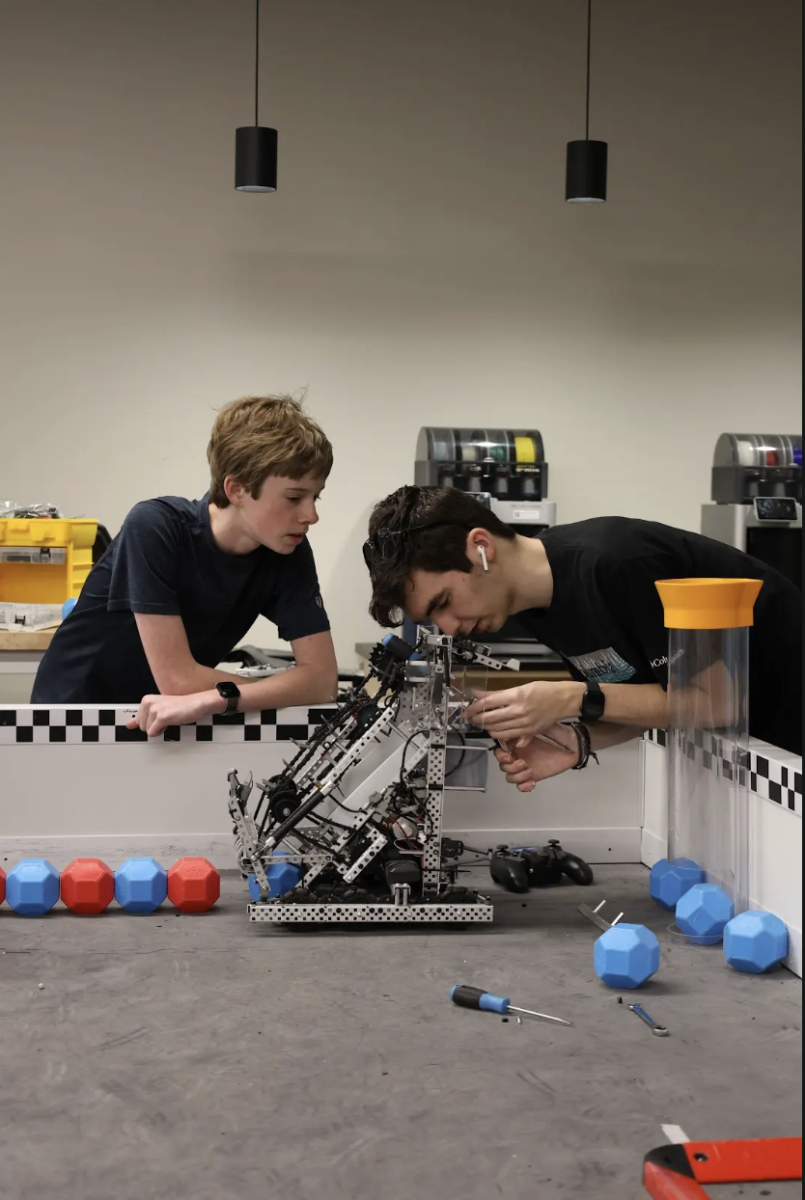
That chaos acts as the ultimate place for the Shorecrest robotics teams to demonstrate their skills. Divided up into three teams, 6104A, 6104G and 6104M, the program requires students to spend months designing, building and testing custom robots to battle against other schools. At competitions, they must survive the qualifying rounds and fight for their spot in the eliminations.
For team 6104G, the hard work paid off. They received an Excellence Award, the highest honor given by VEX, which reflects quality and an overall mastery of all positions on the team. Members also secured the Innovate Award for their clever approach to gameplay and resource management.
“Both awards are difficult to obtain and reflect exceptional achievement. They signify that a team is excelling not only in robot construction and match play, but also in engineering rigor, documentation, problem-solving and collaboration, skills that are central to high-level STEM and engineering programs,” Upper School STEAM and Robotics Teacher Sarah Balisalisa said.
Additionally, team 6104A recently earned the Design Award, a nod to their in-depth engineering notebook and their ability to articulate complex technical details to a panel of judges.
“Team G and team M are going to CREATE together in March. It’s actually over spring break where [they’ll get to] compete against teams worldwide,” Balisalisa said.
To compete, students are required to provide a minimum of an 100-page notebook, including extensive details about the individual robots.
“My team has close to 300 pages of notebook, and the 6104G team has close to 400,” sophomore robotics member Noah Eichenbaum said.
Each year, VEX introduces a new theme. This season, the robots must lift and stack colored cubes into designated zones. Strategy is key. The robots are also equipped with “de-scoring” mechanisms, allowing them to legally remove cubes from their opponents’ stacks.
Constructing these machines isn’t easy. Teams are required to purchase motors, wheels, metal and string from the VEX company during the building process. Students spend anywhere from three to ten hours a week in the lab, where they figure out how they will balance individual tasks with tight team collaboration to ensure their bot performs exactly as programmed when the competition starts.
“For every hour you put in, you can really feel the impact it has. The amount of work you put in really defines what you get out of it,” Eichenbaum said.
During building, team members have the option to work individually on separate aspects of their assigned bot, or they can collaborate.
“[It’s great when we’re] bringing all the kids’ personalities into one room,” Balisalisa said. “I think when they have fun, and they’re smiling, whether that’s leaving a tournament or whether that’s just coming into the space, to me, that’s the most rewarding and entertaining at the same time.”