



![JV boys soccer goalie sophomore Bear Brummett does a goal kick. Normally, Brummett plays defense, but when starting goalie sophomore Kurt Schratweiser missed a match due to illness, Brummett was thrust into the role. “[Brummett] did a great job, especially considering he hadn’t played the position in so long,” Head Coach Casey McDonough said.](https://spschronicle.org/wp-content/uploads/2026/01/image2-1200x800.jpg)




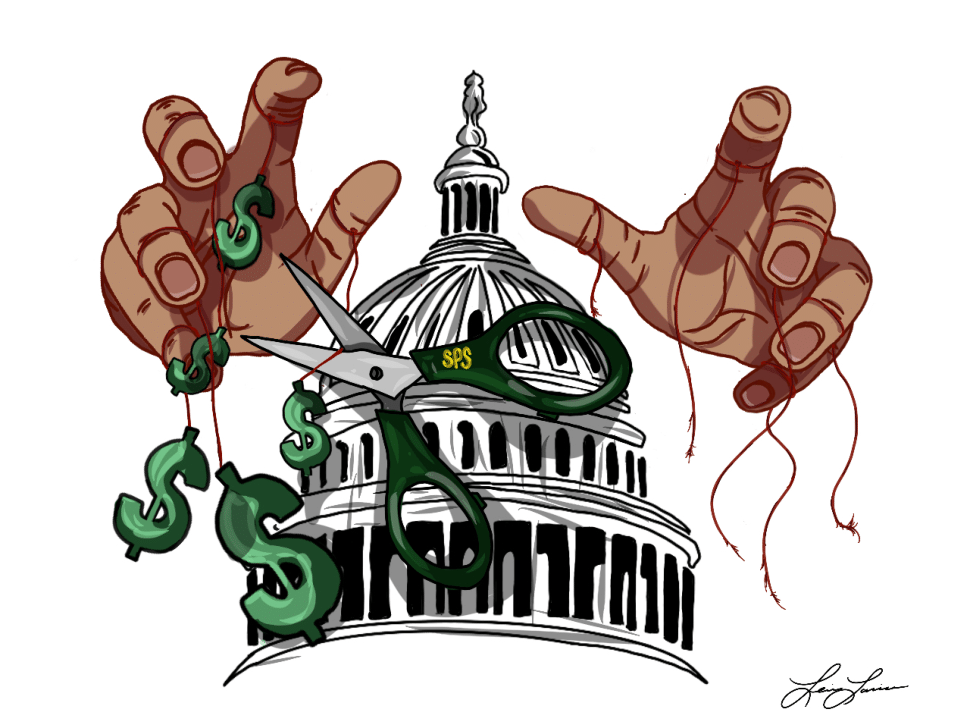


Imagine competing in grueling matches, only to find out you are ineligible for your hard-earned prize money. FHSAA and NCAA prize money restrictions can affect amateur athletes throughout different sports.
Prize money is often an attractive incentive in tennis, golf, beach volleyball and other tournaments. But is a player really an amateur if they accept prize money for winning in their sport? The short answer is: it depends.
Shorecrest athletes often participate in year-round competition and are considered amateur athletes. According to FHSAA bylaws, an amateur is “one who engages in athletic competition solely for the physical, mental, social and pleasure benefits derived from the activity.” The rules regarding amateur sports, prize money and Name, Image and Likeness (NIL) compensation vary by sport and the governing body.
The National Collegiate Athletic Association (NCAA), the main recruiting clearinghouse for high school athletes who want to play in college, has strict rules regarding compensation. That $5,000-Cash-Prize-for-First-Place win you just scored? Unless you’re a professional tennis player, fuhgeddaboudit.
Generally, NCAA rules do not allow amateur athletes to accept cash prizes. Student-athletes can receive compensation for necessary expenses such as tournament fees, meals and travel costs, but prize money is off-limits. However, there is a $10,000 carve-out for amateur tennis players. Sounds clear, right? Not so fast.
The Florida High School Athletic Association (FHSAA) is another governing body with strict rules about cash prizes. According to Malcolm Pollock, Administrator of Eligibility and Compliance for FHSAA, if a student wants to play high school sports, “participation in prize-money tournaments is permitted only if the student does not accept any form of payment or compensation related to their performance.”
So can a student-athlete even participate in the $5,000-Cash-Prize-for-First-Place
tournament? According to Pollock, “if no prize money is accepted, the student would remain in compliance with amateurism standards.”
If a student-athlete participates and actually wins the cash prize, one option is to donate the prize money to charity.
“If prize money is accepted and donated to a charitable organization, the student would still need to ensure that no funds are accepted or handled by the student, directly or indirectly, to maintain amateur status. The winnings can be donated on behalf of the student,” Pollock said.
But the expenses associated with extracurricular sports can really add up, so it may be tempting to accept the prize money and call it reimbursement for expenses.
“The student can accept reimbursement for travel, lodging and meals but not in the form of prize money,” Pollock said.
So, how does the FHSAA know if a student-athlete were to accept prize money?
“Much of what happens regarding amateurism is a function of self-policing and whether or not others may be aware of potential culpability. Typically, violations get reported when there is a lot on the line,” varsity girls tennis coach Bob Davis said.
Pollock also added that “each FHSAA student-athlete is required to sign an EL3 form, which affirms that they will abide by FHSAA amateur rules.”
By signing this form, the student-athlete and parent/guardian acknowledge these requirements and agree to abide by them.
However, some athletes have a different take.
“I don’t think it’s fair to restrict high school athletes from collecting any prize money. I think that there should be a limit, but not a hard cap at zero,” junior Andrei Imensek said.
That said, Imensek offers an interesting idea.
“I think that the [prize money] limit needs to be dynamic in some way because tennis [among other sports] is growing, and there’s more prize money [available],” he said.
In June 2024, FHSAA revised Bylaw 9.9 to reflect new rules regarding NIL, which is distinctly different from the cash prize. Student-athletes are now eligible to receive NIL compensation for activities such as product/service advertisements, promotional activities, social media presence and more.
It’s important to not conflate prize money with NIL compensation, though. If a student-athlete accepts unauthorized prize money, the consequences can be severe, ranging from return of funds, to suspension from school competition, to loss of amateur status, and even to a loss of NCAA eligibility.
“I think the consequences are too extreme. The punishments are so harsh that it’s restricting. In some way, [the rules] need to change to accommodate the future of sports,” Imensek said.