



![JV boys soccer goalie sophomore Bear Brummett does a goal kick. Normally, Brummett plays defense, but when starting goalie sophomore Kurt Schratweiser missed a match due to illness, Brummett was thrust into the role. “[Brummett] did a great job, especially considering he hadn’t played the position in so long,” Head Coach Casey McDonough said.](https://spschronicle.org/wp-content/uploads/2026/01/image2-1200x800.jpg)






On every surface touched, fingerprints are left behind, and because of that, criminals can be caught through fingerprinting, which investigators use to catch them. This seems foreign to most of us, but for faculty advisor of the forensic science club and US Math Teacher Lisa Elmore, crime is a close reality.
“I did have a friend who was murdered. It was believed that she was murdered by a serial killer, though they never caught him. I am both fascinated and repulsed by people who can behave in this way because it is so foreign to me,” said Elmore.
Her origin story is unique: a friend was a victim of a crime. Instead of shying away from the subject altogether, it fascinated her that much more.
“I was interested in psychology before that, but having a friend who was brutally murdered like that led me to want to learn more about people like this because they seemed so alien to me. As a result of this experience, I became much more cautious as a person and especially as a parent. This type of experience changes you. It makes you look at the world differently,” Elmore said.
Forensic Science involves analyzing evidence for criminal, legal and civil investigations. This club examines the psychology behind criminal minds and tests critical thinking skills.
“There is a lot of excitement surrounding that area of psychology, like, how do we catch a killer, and that’s what inspired the interest I have for the club,” said faculty advisor and Upper School Math Teacher Lisa Elmore.
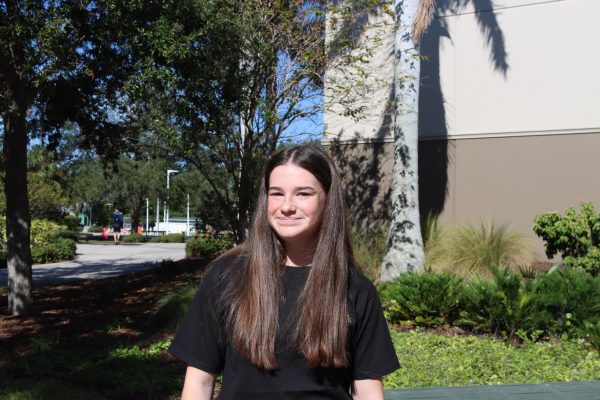
Juniors Abriella Mills and Indiana Wells are co-presidents of the club, turning their passion into an extracurricular activity.
“You get to learn a lot about really famous unsolved cases that are seen on documentaries, and you get to learn the process of forensic scientists,” Mills said.
Wells enjoys the hands-on experience the club participates in:
“I really enjoyed fingerprinting because it’s something you can physically see. If you look really close, you can see the little marks on your hands,” junior Indiana Wells said.
Mills and Wells both share this interest in forensic science and want to inspire others to pursue a career in the field.
“I grew up with my mom watching all these crime shows and trying to figure out the information. It’s like a test. Why would somebody do something? Did somebody do something? Why is this person more likely than another person?” Wells said.
Wells went to a forensics summer camp, and the experience carried over into the club. Thrilling cases and evidence to decipher engage students and spark interest. The club is taught to find the criminal and prove the innocence of others by decoding human behavior.
“My favorite part is seeing how many people come to the meetings and how they seem happy to learn from the evidence that we find,” Mills said.
For Halloween, the club dissected pumpkins to look at the different types of seeds and textures underneath a microscope. There are around 20 members in the club, and the club meets around once a month.
“We’re going to have a crime scene where we partner with the law club, and we will do an actual mock court case,” Wells said.
The group’s goal is to educate and explore forensic science, while helping members find their true passion.
From one piece of evidence like a fingerprint, someone’s entire life story — as well as the answer to an unsolved crime — can be found.
“I find it fascinating that you can find out details and backgrounds about people you’ve never even met before through their fingerprints,” said Patel.