




![JV boys soccer goalie sophomore Bear Brummett does a goal kick. Normally, Brummett plays defense, but when starting goalie sophomore Kurt Schratweiser missed a match due to illness, Brummett was thrust into the role. “[Brummett] did a great job, especially considering he hadn’t played the position in so long,” Head Coach Casey McDonough said.](https://spschronicle.org/wp-content/uploads/2026/01/image2-1200x800.jpg)







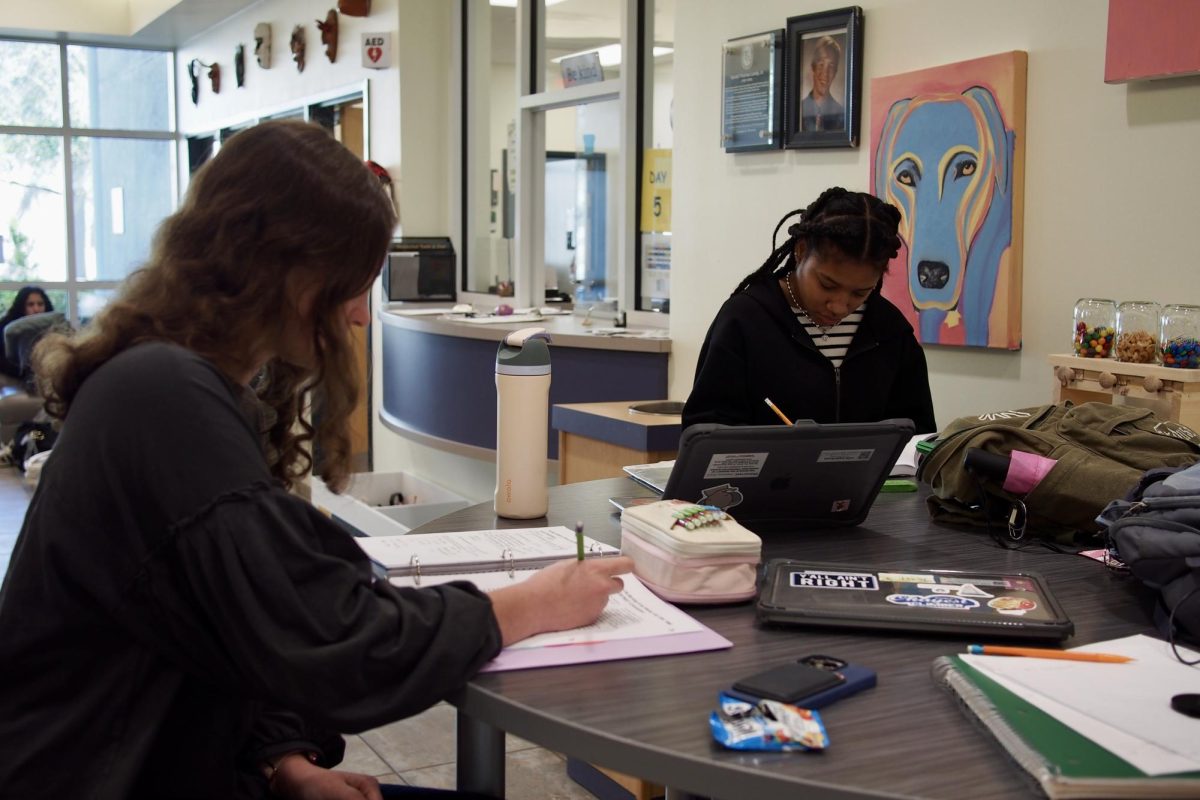
“School is not a competition; you will all get to exactly where you need to be in life,” Upper School Counselor Brian Wiley said. Yet, at a highly competitive school like Shorecrest, students tend to treat it as one.
Teenagers are getting less and less sleep as demands for school increase; however, sleep is not a suggestion. It’s a necessity. Many case studies have reported that the closer you are to eight-10 hours of sleep, the better the grade you receive.
According to Stanford Medicine, sleep deprivation results in poor concentration and memory, which is exactly the opposite of what a student needs when taking a test.
It doesn’t help that in college preparatory schools, academic standards are set higher than normal. Shorecrest especially has a reputation for moving faster than other schools. Higher expectations and larger workloads only make it harder to get the recommended amount of sleep for success.
“In [my] past schools, it was more like…the teacher did 80 percent of the work, and you do 20, but it’s almost flipped the other way around for Shorecrest. Like, 20 percent teacher, 80 percent student … It’s a lot more work,” junior Margo Armstrong said.
Students often also cram in APs or participate in active clubs to ensure they stand out. These time commitments can easily soak up free time at night that should be dedicated to rest, which is indicated in a survey conducted by the National Library of Medicine, where only 30 percent of high school students reported getting the standard eight or more hours of sleep. High-achieving students can put too much pressure on themselves, resulting in high stress and health issues.
“I would say, overall, sleep is probably more important [than studying], just because of the physical and mental effects on a person if they don’t get enough sleep. With that being said, I don’t think I get enough sleep at all,” sophomore Danny Keane said.
Sleep is how the body grows and repairs. It’s how the mind processes events and prepares for new days. Without it, a human cannot function. Sleep is necessary for everyone, and even more so for the growth and development of children.
“This year, my health took a really big hit, and I think part of the reason it was so bad was because I wasn’t getting enough sleep, and I was so stressed,” Armstrong said. “I mean, I sat in a hospital bed worrying about what my workload would look like when I got back.”
With all of the external pressures like extracurriculars, grades and college applications, students can easily forget their limits and push themselves too far. In the wake of the new year, now is a great time for students to begin prioritizing their sleep and organizing workloads however possible.
There are many resources available to assist students, such as peer tutoring and Upper School Learning Specialist Dr. Jennifer Hart’s various tools. If that doesn’t work, then communicating with teachers or rethinking priorities will always be a better alternative to sleep deprivation.
“You’ll be faced with many life challenges. You need to be in a healthy headspace to take those on,” Wiley said. “If you don’t prioritize yourself, you just end up in a cycle of burnout and anxiety. Pace yourselves and just do your best. That is enough.”